
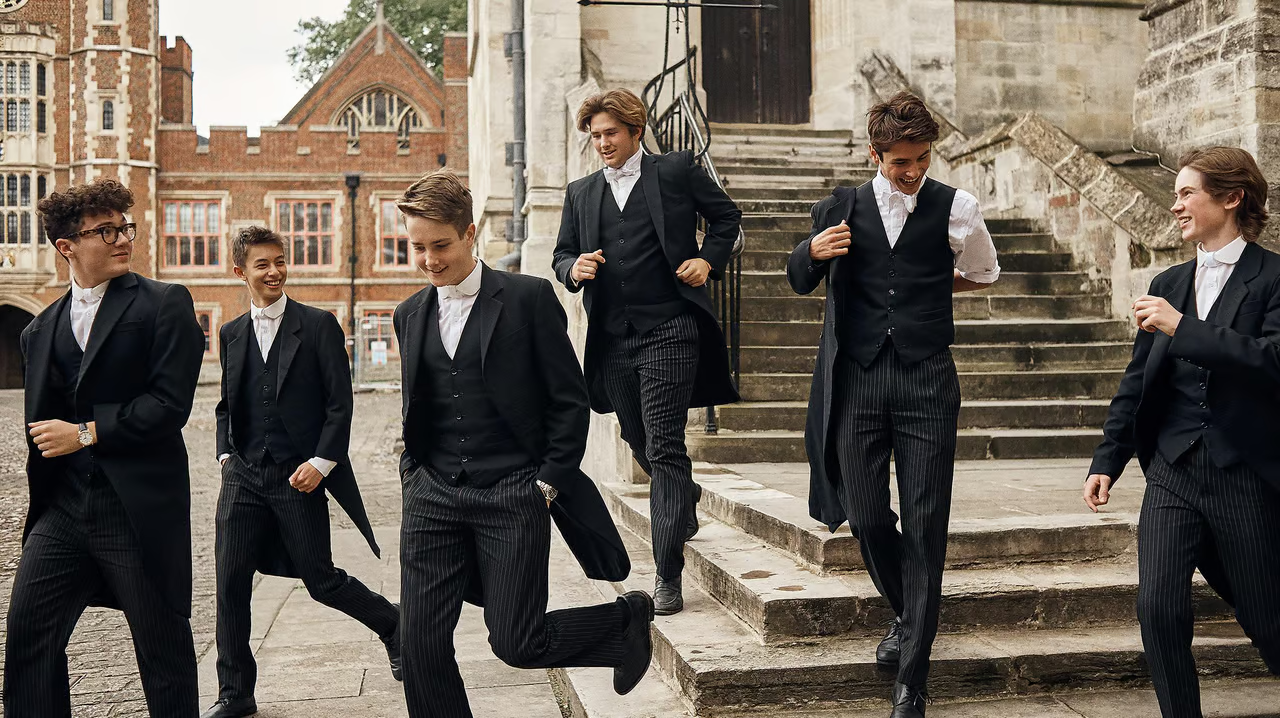
Appointments to top legal professions in 2024 remains stacked in favour of those privately educated. Government figures first published in July but updated yesterday, reveal that for judicial applicants to legal positions, those educated in private schools are nearly a third more likely to be appointed over their state school counterparts.
The figures vary for each position advertised. For those applying to be appointed Judges for employment tribunals, those privately educated had a nearly 50% chance of being appointed following an application, compared to only a 20% chance for their state educated counterparts.
This is further reflected in the appointments of magistrates, which again are more likely to appointed if they were educated privately.
Revealed within the Diversity of the judiciary: 2024 statistics, published by the Judicial Diversity Forum within the MOJ, the bias towards privately educated lawyers and magistrates highlights a longstanding issue of social mobility.
In their blog, Penelope Gibbs of Transform Justice stated in response to these statistics “The recruitment process seemed to be biased in favour of white, older, middle class candidates. I’m sure they’ll make great magistrates, but I think the recruitment process needs a major overhaul. The credibility of the justice system relies on the fairness of processes and this one seemed skewed.”
In response to our findings, the Judicial Appointments Commission, who collected the data, stated:
“The JAC is strongly committed to diversity and wants to see a judiciary that is better reflective of diversity in society. We appoint solely based on merit, and we regularly review our processes to ensure they are fair and free from bias. All protected characteristics, plus socio-economic background, are considered when we are undertaking our outreach and quality assurance measures.
“We are working closely with partners to broaden our reach to new candidate pools including those from lower socio-economic backgrounds. We are also continuing to support under-represented candidate groups through our Targeted Outreach programme”.
They further outlined that although privately educated applicants were more likely to be appointed, the majority of those appointed were educated at a UK state school (71%). The Institute for Fiscal Studies reported in 2022 that 6.4% of school children were in private education, yet clearly are overrepresented in total applications.
