
I get to read a lot of reports from the Prison Inspectorate, Ofsted, the Prisons and Probation Ombudsman, and more. Many of them are detailed, hard hitting, and critical of failings of the establishments they are describing. However perhaps the most concerning of all I have seen were reports on Young Offenders’ Institutions (YOIs) from Ofsted and the Chief Inspector of Prisons. They laid out failures within each of the four, now three, establishments.
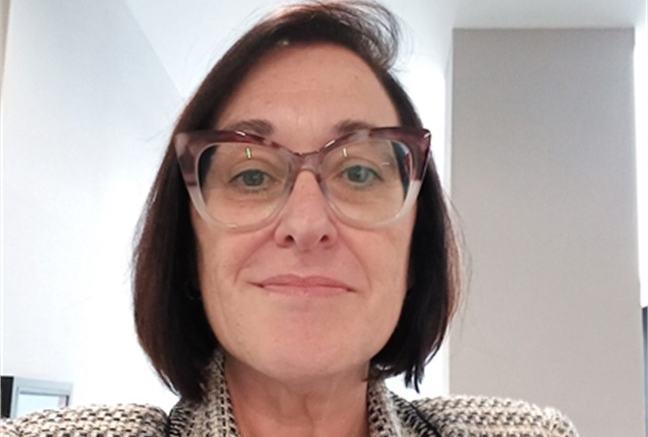
However until I sat down and interviewed Maria Navarro from Ofsted, the watchdog’s specialist advisor for offender learning and high needs provision, I just saw words and troubling statistics. Having listened to her description of the places, and the struggles faced by all those inside, I suddenly saw real people, real children, whose future was being betrayed.
‘Haunting’
I shall turn the clock back and start from the beginning. I had heard Ms Navarro address a London conference on education, and was intrigued by her opening in which she said that in Victorian times Governors asked all those entering the jail two questions. What was their name? And could they read? She said: “Our professional ancestors understood all too well the importance of education.” Given the recent reports on the state of education in our jails, I asked for an interview.
We discussed the problems of education in the adult establishments, and the interview appears in the November print edition of Inside Time, but we ran out of time as there was so much to discuss, and did not reach YOIs. So we arranged to talk again. And whilst the adult estate has problems – which she said were down to lack of leadership from education providers, governors, Prison Group Directors, and HMPPS headquarters – the YOIs she described are in a desperate state, and those within them are suffering.
Maria said the condition of YOIs has “haunted” her. “After joining inspectors on a visit to one YOI we stood outside in a state of shock,” she told me. “Our inspectors required support to continue after that.” Maria has worked in the sector for 18 years, and so this reaction was clearly warranted. After driving home, she checked when Ofsted had last rated any of the four, now three, YOIs as good. “In the past 10 years, none. They had been declining on a free fall with no signs of improvement at all. I knew we had to do something about it, and that’s the origin of the review of the sector.”
She said these children have complex problems but that is no excuse for failing them. Schools failed them, many have neurodiverse issues, their educational standards are low, and many have been groomed into criminal activities. Anti-social behaviour is common. “In one establishment of 90, each have four others with whom they cannot mix, giving 388 combinations of people which have to be prevented. They are kept locked in cells getting worse, and are only allowed out with an officer. Teaching is brief, again in cells, if it happens. This may prevent fights, but remember they’ll be free one day. Locking them away solves nothing. They are not learning to socialise, and that is damaging them further.”
Then there is the management of the institutions. “There is no stability. Governors change frequently, perhaps even annually. Following a negative inspection report we see a development plan, then find it is forgotten as someone else takes over. Staff, teachers, leave. Children may be progressing with one teacher, but that person departs, good work is lost. Too many are taught English and Maths by non-specialists. Too few teachers have experience in dealing with disruptive behaviour. These are children who have been failed for all their lives, and these places are failing them even more.”
She told me: “YOIs now hold maybe 400 children, not great numbers in proportion to everything Ofsted covers, but they deserve a proper chance. Secure children’s homes and training centres face the same challenges, but appear to manage it better.
“It seems now a rating of ‘requires improvement’ is considered good enough for YOIs. It’s normal to navigate between inadequacy and requiring improvement. Aspiration to become good is missing. We need a positive plan from the Youth Custody Service, and a commitment to implement.”
No development
Maria is absolutely correct. The 400 in these facilities, run on our behalf, are effectively just being managed. One day they will be released, with no improved standard of education. She says, however, that the Inspectorate will not accept them being allowed to continue to fail and will carry on demanding that they receive the highest quality of learning. Ofsted will not accept that their behaviour is such that they should be stopped from socialising and be kept in cells, getting nothing positive but instead becoming more bitter. They are, she says “just stopping them fighting with each other. Not moving them forwards.” Specialist teachers and staff are needed, not just prison officers and general teachers. These children deserve far more from us all. They deserve development in their lives.
So do teachers. She continued: “If you were a teacher and you feel you are getting continuous and ongoing professional development, psychological development, behavioural trauma informed development, you feel more confident in your ability to manage behaviour in a class. Then there can be experienced officers who understand the needs of the children, who are outside the classroom door who understand the individuals in the YOI, and the issues bothering a particular learner, and could come into the classroom if needed and offer to that young person to go in with them if they want. It’s a joint effort, a collective effort, which has to be well informed.”
She continued: “We need stability. We need committed staff. We need staff training and support, for teachers and officers. We need commitment from the Youth Custody Service when they respond to the report, and prepare their plan to resolve the issues. And sufficient resources.”
The rights of the child
I have given this a lot of thought since the interview. Ten years of decline, year after year of reports, and no significant change. Amongst other reports from the Chief Inspector of Prisons I see there are some that produce ‘Urgent Notifications’ when prisons are crumbling. Recently that has included Rochester and Manchester, and when these come out, I see that the Prisons Minister himself makes a statement and people leap to action.
So I contacted the Ministry of Justice about the YOI report, and my interview. After all, if a rat infestation in a prison, drugs, and violence, warrant an urgent notification with a quick reaction, why does not a system-wide failure to deliver education and security to these children who have ended up in a YOI? Surely that is urgent. I asked if the Minister would like to comment?
Instead I got a reply from a Ministry of Justice spokesperson who said “This government has inherited a criminal justice system in crisis, with young people in custody negatively impacted for too many years.
“We know education is the key to reducing reoffending and cutting crime, and we are committed to tackling these challenges head on by increasing access to education and working with experts to develop a broad curriculum.”
They added that the “Youth Custody Service is driving improvements in the quality of education provision by working alongside subject matter experts, Governors, and education providers to develop broad and balanced curriculums. Recent improvements are having an impact, such as the dedicated Heads of Skills, Education and Work whose impact was noted in the HMIP Ofsted report, and driving a positive outcome as seen by Ofsted in their improved scores in the most recent report for HMYOI Werrington.
“They are delivering a range of learning and enrichment activities that are individualised and responsive to children’s needs, which are regularly reviewed.
“We have opened the first Secure School this summer, which is a first-of-its-kind school with security providing alternative placement options for children away from YOIs. This delivers a fully integrated learning and well-being offer.
“The Youth Custody Service is developing a Children and Young People Strategy which will set out a clear, ambitious, but realistic future vision to reform custody for children.”
Now, this sounds positive, albeit 10 years too late. Strong actions could and should have been taken as the decline began back in 2014. I would have wanted to see a ministerial statement with a timetable. I would have wanted to see targets for the actions promised. Above all, I am concerned by the statement there must be a “realistic future vision.” That sounds weak, whereas in my view there needs to be focussed action, now, and ambitious targets. Is an aspiration to rise to a level of ‘requires improvement’ going to be accepted as a “realistic future vision”? After all, how much will any of that benefit the 400 inside right now, and the many others who moved from failing YOIs and ended up in the adult prisons?
There is a UN convention, signed by the UK, stating clearly that priority must be given to the rights of the child. Where is that in these Institutions and in our prison system? Above all, if the state of YOIs does not require an Urgent Notification and become a ministerial priority, with these three separate units suffering from the same failures, I have no idea what actually would.