
Our understanding of London’s evolution under the Romans has taken a major leap forwards after a major discovery underneath the basement of an office block near Bank Station. It has been described as one of the most important pieces of Roman history ever unearthed in the city of London.
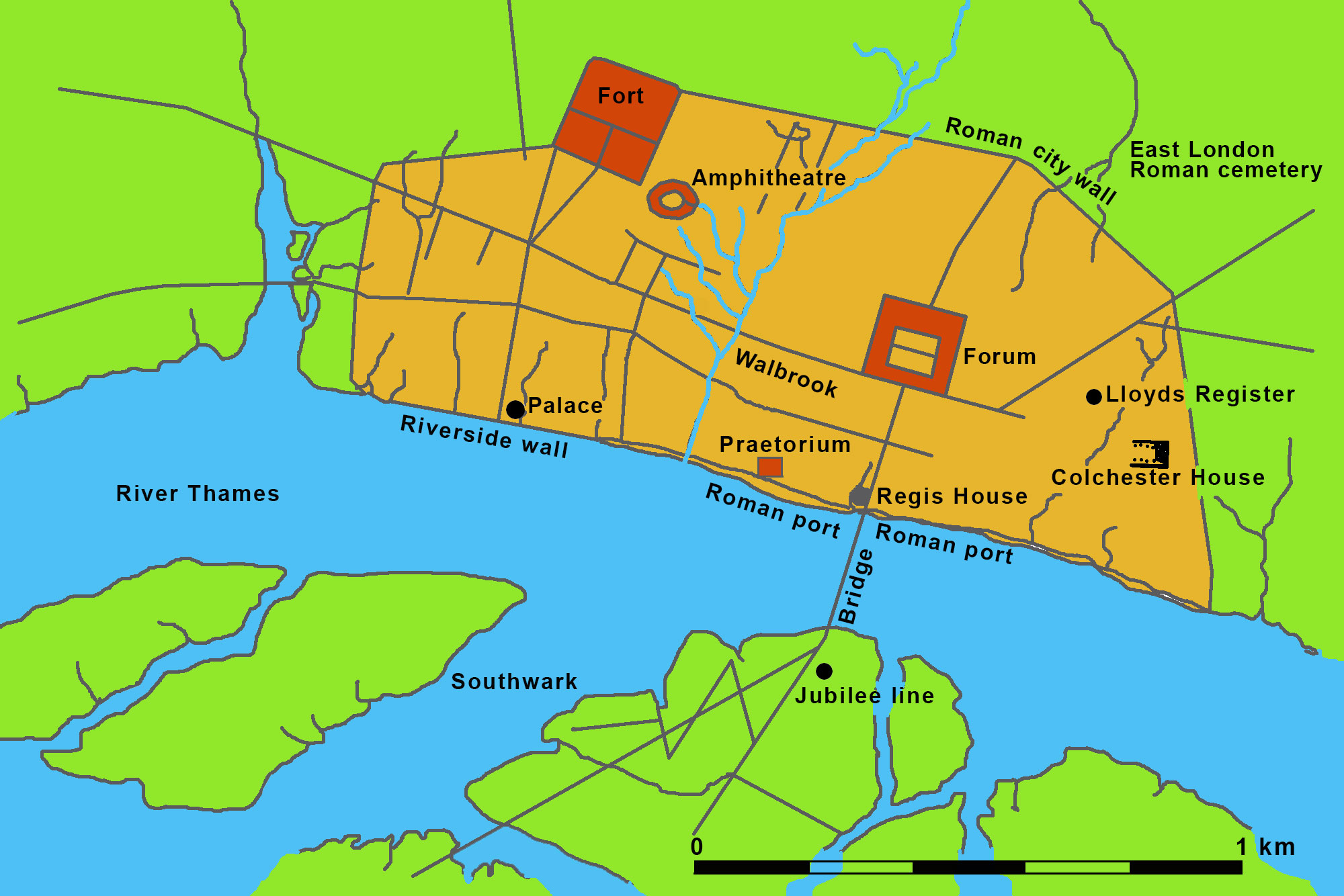
Archaeologists have found a substantial piece of the ancient city’s first basilica – a 2,000 year old public building where major political, economic and administrative decisions were made. The Basilica was attached to the north wall of the Forum Building shown on the map of Roman London above, provided by the London Museum.
The excavation has so far revealed sections of stone wall that formed the base of the basilica, which would have been two-and-a-half storeys high.
The site, which will eventually be opened to the public, sheds light on the city’s beginnings and is close to Old Street so local residents and those who work in our area will be able to enjoy it.
“This is so significant – this is the heart of Roman London,” said Sophie Jackson, from the Museum of London Archaeology (Mola), who revealed the new find.
“This building will tell us so much about the origins of London, why London grew and why it was chosen as the capital of Britain. It’s just amazing.”
The site was discovered at 85 Gracechurch Street, an office building that’s about to be demolished and redeveloped. Earlier archaeological investigations revealed the ancient basilica’s approximate location, so the team created several small test pits to see what was hidden beneath the concrete floor. On the third attempt, digging between the filing cabinets, they struck lucky.
“You can see a huge chunk of Roman masonry, and it’s incredible that it survives this well. We’re absolutely thrilled that there’s so much of it here,” said Sophie Jackson.
The wall is made from a type of limestone from Kent, and formed an imposing building – the basilica would have been about 40m long, 20m wide and 12m high.Other artifacts have been found too, including a roof tile imprinted with the stamp of an official from the ancient city.
A spokesperson for the London Museum, the new name for the Museum of London, told Old Street News: “We have so much to learn about our past here in London, and every time we find these important parts of Roman Londinium, our knowledge grows and we can fit another piece into the jigsaw puzzle of our past.”
The London Museum has relocated from its former site near Barbican and will reopen in Smithfield Market in 2026.